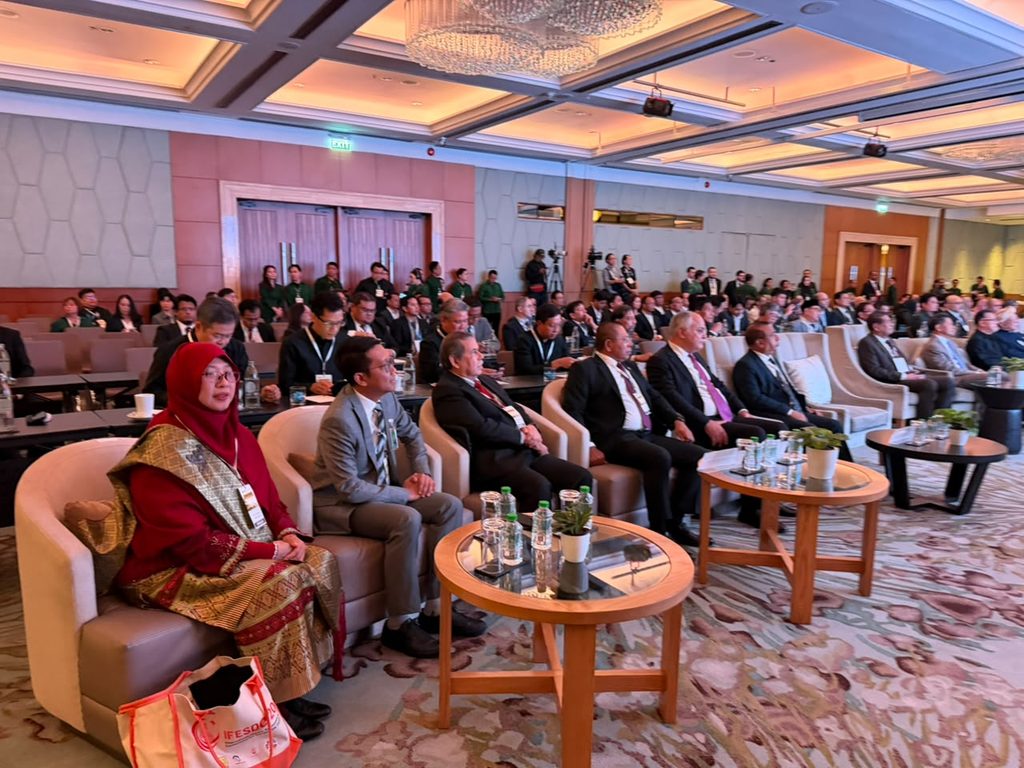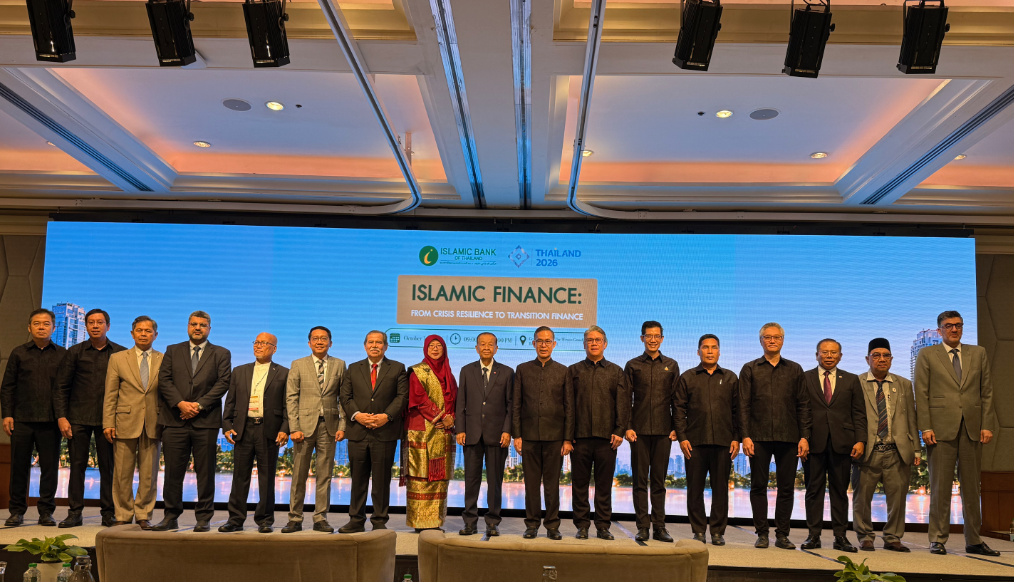

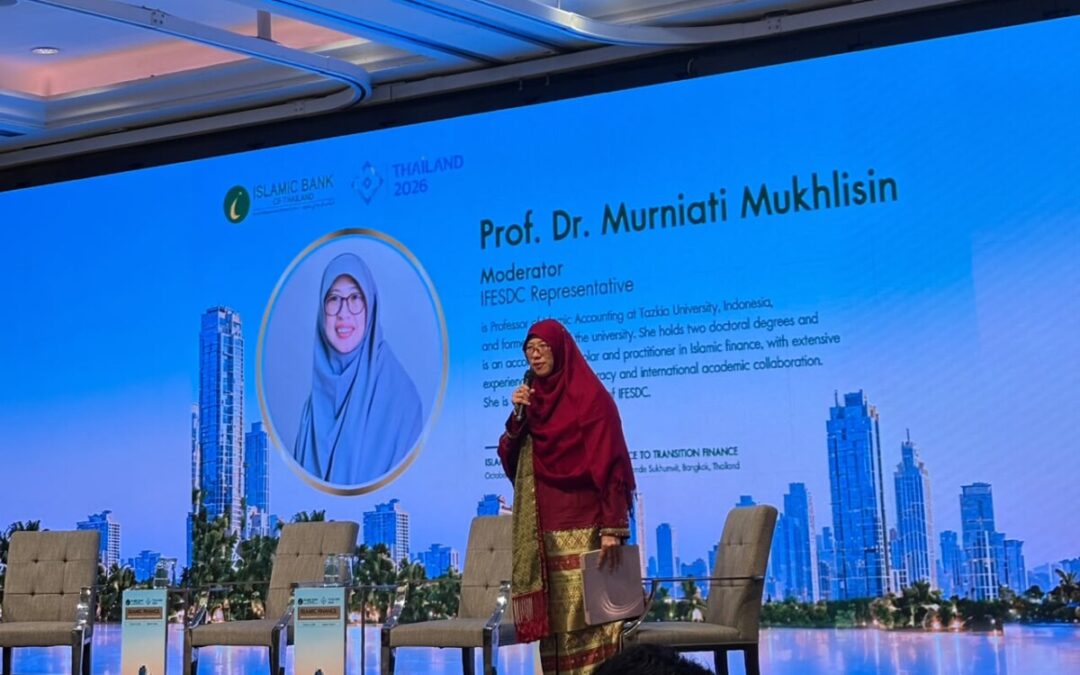
BANGKOK, THAILAND, 14 October 2026 — Islamic finance must move beyond demonstrating resilience during financial crises and take a more active role in financing sustainable development, financial inclusion, and economic transformation. This was the central message of an affiliated program organized by the Islamic Bank of Thailand (ibank), in collaboration with the International Islamic Economics and Finance Conference for Sustainable Development (IFESDC), during the 2026 IMF–World Bank Group Annual Meetings in Bangkok.
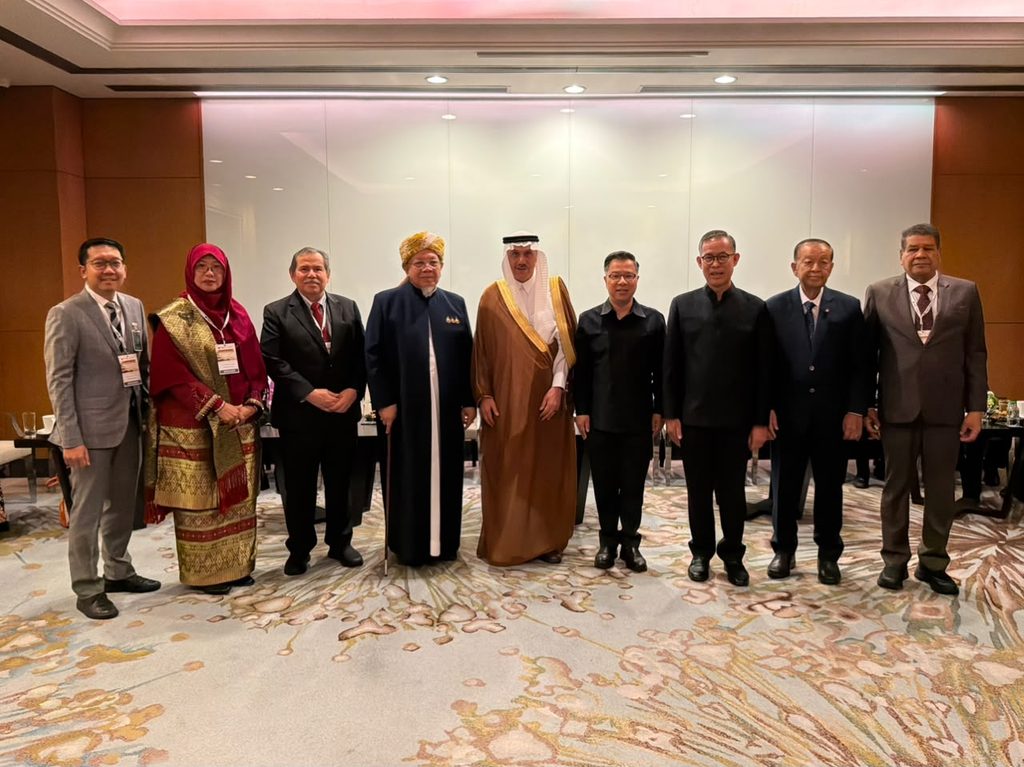
During the official opening remarks, His Eminence Arun Boonchom, the Sheikhul Islam of Thailand highlighted that at its core, Islamic finance is fundamentally guided by the higher objectives of Islamic law i.e. Maqasid al-Shariah, which emphasizes social justice, equity, transparent risk-sharing, and the preservation of wealth for the greater public good (Maslahah). 150 participants came, not only from ASEAN countries but also from African and Middle East countries. Also present was the Ambassador of the Republic of Indonesia to the Kingdom of Thailand, Hari Prabowo—who was inaugurated on December 19, 2025, and concurrently serves as Indonesia's Permanent Representative to the United Nations Economic and Social Commission for Asia and the Pacific (UNESCAP). Ambassadors from Oman, Malaysia, Egypt, and Saudi Arabia also extended their support.
The Chairman of Islamic Development Bank (IsDB) Group, Muhammad Sulaiman Al Jasser in his keynote speech said that: “The future of Islamic finance should not be measured only by the growth of its assets, but also by the value it creates for people, the resilience it builds in communities, and its contribution to sustainable development.”
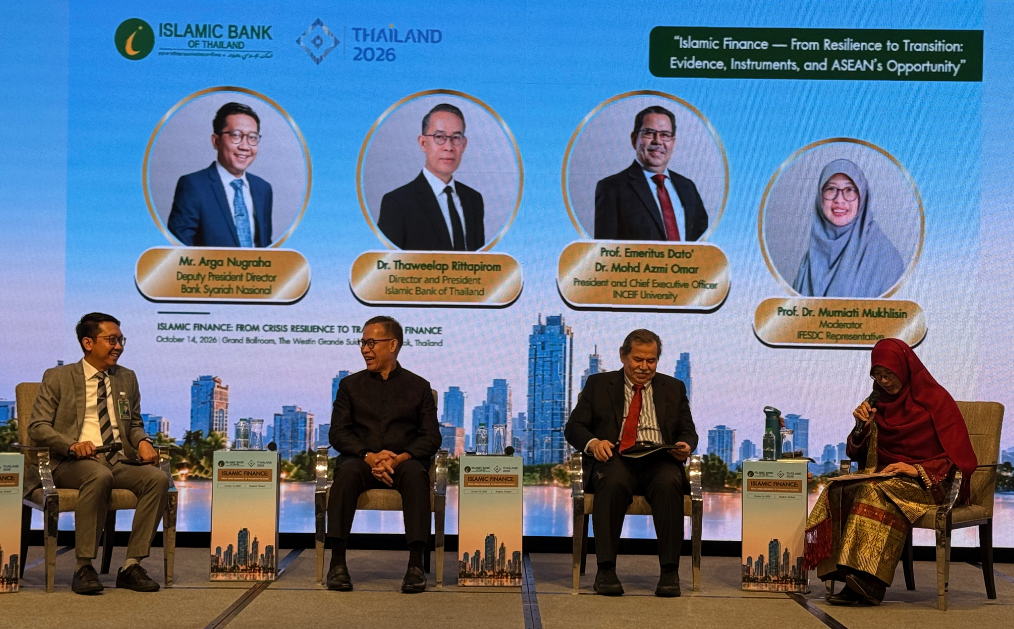
The panel discussion was then held under the theme “Islamic Finance: From Crisis Resilience to Transition Finance,” the program brought together leading practitioners and scholars to explore how Islamic financial institutions can mobilize capital for inclusive and sustainable growth, particularly across ASEAN.The event featured Thaweelap Rittapirom, Director and President of ibank; Arga Mahanana Nugraha, Deputy President Director of Bank Syariah Nasional (BSN), Indonesia; and Mohd Azmi Omar, President and Chief Executive Officer of INCEIF University. The discussion was moderated by Murniati Mukhlisin, representing IFESDC that consists of IMAAM, Tazkia University, Sakinah Finance, and EDS16 The World Bank Group.
The dialogue examined institutional resilience, financial inclusion, risk-sharing mechanisms, sukuk, Islamic environmental, social, and governance (ESG) frameworks, and the role of Islamic social finance in addressing poverty and supporting underserved communities.
A key focus was translating Islamic finance principles into practical financing solutions. Sukuk, asset-backed financing, and risk-sharing contracts such as Musharakah and Mudharabah were discussed as potential mechanisms for mobilizing capital toward renewable energy, sustainable infrastructure, and small and medium-sized enterprises. Integrating zakat and waqf with the wider financial ecosystem was also highlighted as an opportunity to strengthen social protection and economic participation.
The panel further emphasized ASEAN’s potential to strengthen its position in global Islamic finance through regional cooperation. Greater interoperability among financial institutions, regulators, academic institutions, and development partners could facilitate cross-border capital flows and support the development of credible transition-finance taxonomies and common impact indicators.
“From principles to evidence, from financial instruments to measurable impact, and from individual institutional initiatives to regional cooperation” said Murniati in her concluding remarks.
The discussions underscored the importance of robust governance, transparent reporting, and measurable social and environmental outcomes to ensure that Islamic transition finance delivers substantive benefits beyond Shariah compliance or sustainability labels.
As a follow-up initiative, ibank plans to publish a Bangkok Policy Note on Islamic Transition Finance within two to three weeks after the event. “The policy note is expected to translate the discussion into actionable recommendations for strengthening institutional resilience, expanding financial inclusion, mobilizing transition capital, and enhancing ASEAN’s connection to the global Islamic finance ecosystem. So it is not a one off event” said Thaweelap in his closing remarks.
The program concluded with a shared call to strengthen collaboration across the Islamic finance industry and align financial innovation with the broader objectives of sustainable development and shared prosperity.
By connecting institutional resilience with measurable impact, Islamic finance has an opportunity to become a more effective driver of inclusive growth and sustainable economic transformation across ASEAN and beyond.
Source: Sakinah Finance Public Relations